
Bridging the Gap Between People As a Peer Support Worker & Consultant
The Big Description
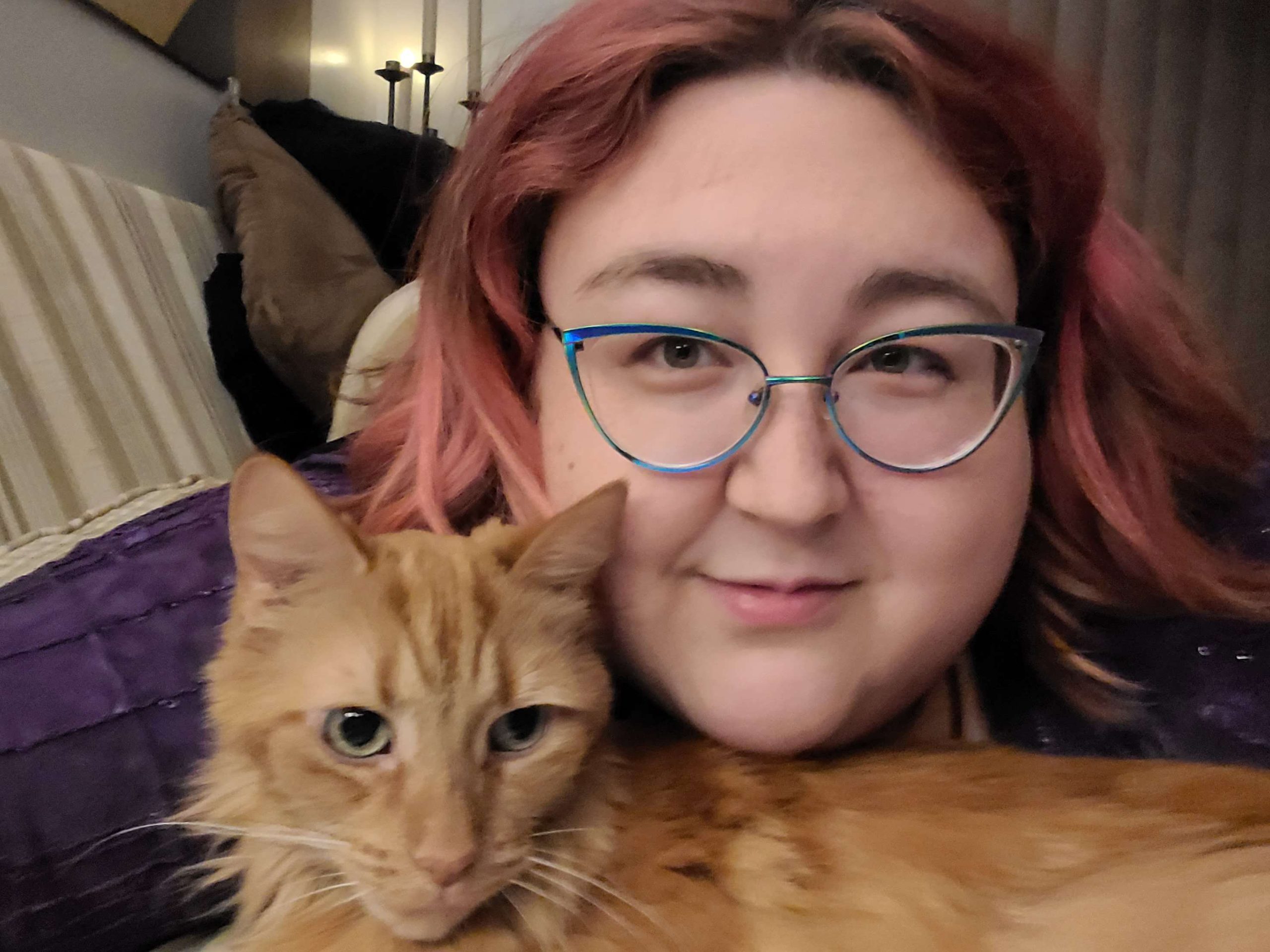
Welcome! I’m Bridget (they/them), a wearer of many hats and provider of many skills and knowledge. For the sake of simplicity, I’m offering peer support work, coaching and tutoring, and academic consultations as my named services.
I’m mixed Eurasian (Chinese/White), queer, transfeminine, multiply disabled and neurospicy, witchy, fat, and still a fangirl. I have most of a PhD (all but dissertation) in Gender Studies, and a Masters in Critical Disability Studies. I’ve worked in many fields including front-line social services and non-profits, educational development, book publishing, performance art, workshops, trainings, and consultations in EDI, events planning, volunteer coordination, and tutoring.
I’m a published author of both academic and fictional (YA, speculative fiction) texts. I spent four years as a Teaching Assistant at York University for Introduction to Gender Studies, and then worked for the Teaching Commons (delivering workshops and supporting new instructors in developing their teaching skills). Before that, I worked for and was trained by the LGBTQ Youth Line for three years as a volunteer, and for two more as a shift supervisor, doing front-line peer support. I’ve given trainings and workshops to a wealth of professions and worked on notable projects such as TransPULSE, Sex Information & Education Council of Canada (SIECCAN), Adults Hacking ADHD (AHA), and Project Re-Vision.
Skills
I am skilled in:
- anti-oppressive, trauma-informed, Equity, Diversity, and Inclusion (EDI) fundamentals
- neurodiversity and disability skills and education
- sexual health and harm reduction
- relationships and interpersonal conflict resolution
- self esteem/worth and body image
- arts-based education and service provision
- community connections and resources
- arts-informed community research
- Indigenous-informed research
- community development and organizing
- cultural competency and humility
- 我也可以说汉语,但是我读的字很差 (Translation: I can speak Mandarin, but my reading is not very good)
As a scholar and professional, I try and center multimodality, universal and inclusive design. I believe in reducing barriers by gearing content around flexibility and empathy for different needs. I break down big concepts and make them more relatable, because I value knowledge transfer and mobilization. I enjoy arts-informed modalities because I’m a divergent thinker. That part of my journey led me to Indigenous scholars such as Ruth Green and Kathy Absolon who demonstrate how story can be valid sources of knowledge and ways to express knowledge. I am still actively learning decolonization, but it is a value that I hold for creating fairer relations with each other.
My goal is to provide a variety of services to further expand on what is offered at Night Owl Counseling. Please continue reading for more details on my services as a peer support worker, neurodiversity coach, tutor, and/or consultant.
My personal background
As part of my PhD work, I designed my research around the metaphor of dragons. As a mixed Eurasian person, dragons mean different things on both sides of my family. They can be greedy and capricious, or benevolent and kind. Dragons have features from many different creatures. Scales of a carp, mane of a horse, talons of an eagle, and so many more. But somehow, all these different parts make up a whole creature with immense power. The interpretation of what is a dragon also differs according to what culture you’re viewing them from.
Like dragons, I am complex with many different parts. My skills and interests are also varied and I can’t be easily pigeon-holed as any specific role. But what I offer is a wealth of knowledge and experience to advise and support your life.
I’ve been involved in many community projects over the years and met and worked with many different people. I’ve survived many forms of violence and have found strategies to cope and thrive. This informs why I am providing support to you.
Outside of my professional background, I’m a gamer and involved in fandom. I favour RPG games or any character-focused games. I’m usually into games for the shipping. Which leads me to fandom. I started reading fanfic at fourteen and have written fic over the years. This is one of the reasons why I found ways to incorporate story writing into my academic work. I also do text-based roleplay and live-action roleplay games such as D&D and Pathfinder.
One of my special interests is human sexuality. The queer youth group I attended was partially run by sexual health nurses, who instilled in me a life-long interest in what I humourously call, “the human mating ritual”. This extends from kink and poly relationships, through the asexuality spectrum, relationships, desirability, self esteem/worth, and all the way to communication. At the end of the day, I am interested in supporting people’s bodily autonomy and agency. Whether it’s about fending off the pressure to procreate or marry, developing comfort with a possible relationship, or talking through negotiations with a satellite partner, I am capable of supporting you through it.
My whole adventure with getting published began with a story I wrote for one of my Master’s degree classes. On a whim, I submitted it to an anthology and got into it. From there, I had a lovely opportunity to attend a trans writer’s retreat in NYC, publish in another anthology, and write a Young Adults novel. Academically, I have a number of articles in journals and a co-written book with a colleague. I was a co-editor for a special issue on disability and fanfic. I’ve been through the publication process and have worked with a few publishers both in and out of academia.
Musically, I sing, play clarinet, recorder, hulusi, concert flute, and a little piano. I’ve written a few filks (parody songs) and been involved with the bardic arts in the SCA (Society for Creative Anachronism). I’ve also integrated song into performance art pieces that looked at topics such as transmisogyny, fatphobia, queer love, Chinese culture, and disability. One of my favourite performances was the time I was a freak show exhibit, years before The Greatest Showman came out.
I’ve done a little acting and live roleplay. While I was working with Sketch Working Arts, I was part of a group that roleplayed as characters for service providers to interact with. Then we gave feedback to the service providers. I’d love to try and integrate this skill in a therapeutic context again. Processing a feeling with the slight distance of roleplay can be healing. It’s one of the reasons why I play in a number of D&D games.
For physical activities, I fence, and learned Wu-style tai chi (both beginner). I have special interests in ecology, green technology, zoology, botany, paleontology, marine biology, Chinese and queer history. This is what I spent my pandemic lockdown on. Getting back in touch with all of my geeky science interests.
Peer support work
For information on what peer support is, look here: https://cmha.ca/wp-content/uploads/2024/10/What-is-Peer-Support-Exactly.pdf
As a peer support worker, I offer supportive, non-judgmental dialogue. For the sake of transparency, I’d like to note that I do not have a professional college to report to. If something I do or say were to harm you, and I were to not resolve the issue properly, there is no manager to speak to about it. That being said, I receive regular clinical supervision to maximize my ethical accountability.
All services are available via video, phone, or text. I do not provide in-person services.
Peer support specialties and populations
- youth (13-18)
- parents of disabled, neurodivergent, and/or LGBTQ children
- neurodivergent folks, especially autistic, ADHD, and DID/OSDD
- making community connections and knowing resources (systems navigation)
- complex issues
- interpersonal conflicts
- gender-based issues (this includes cis men facing issues based in masculine gender expectations)
- body image and self esteem
- relationships including poly, kink, ace spectrum, and singleness
- sexual health and harm reduction
- poly, kink, and sex positivity
- grounding, centering, and cleansing for mental wellness
Peer support work means that I am more of an equal to you who can provide support to you. It differs from professional therapy in that I don’t have a degree in social work or psychology, and do not have the backing of a professional college. But I do have many of the same skills as a registered therapist. I can help you work through issues, and pass on resources. And if it’s an issue that I can’t help with right away, with your consent I can always get advice from Tristan, the registered social worker at Night Owl Counseling – our offices are just down the hall from each other.
As Tristan’s partner and a fellow mental health care worker, I have informed Tristan’s front-line practices over the years. From the beginning of Night Owl Counseling, I’ve been providing Tristan with confidential & anonymous consultations and peer supervision on a variety of topics to support their clients. (Confidentiality is an important value to both of us, and we are careful to ensure that we do not share personally identifiable information when discussing cases.) In turn, I’ve been present for some of the professional development workshops that Tristan has taken, and I’ve absorbed strategies in addressing trauma that I might not have had access to otherwise.
I am familiar with (but presently not certified in) somatic, IFS, EMDR, narrative and arts-informed, and strengths-based modalities. I can talk about sexual health, interpersonal and familial conflicts, safety planning, boundary setting, and crisis intervention.
Due to my flavour of neurospicy, I’m a lot more direct and goal oriented than Tristan. But I can also draw on a therapeutic modality when requested. My ask to you is that you communicate when something doesn’t work or if you need me to switch modalities. I value explicit communication and giving each other grace when mistakes are made.
As a transfeminine person, I present more femininely, but lived life presenting as male for years. Granted, I wasn’t very good at it. But I’ve spent a lot of time with men as someone attracted to masculinity. The latter part of my youth was spent in gay male communities and navigating them as a fat, femme, Asian. I’d like to offer my skills to men struggling with the dating world. Minus that ‘alpha male’ Manosphere nonsense.
I’m witchy because my spiritual background is (of course) complex. My dad is Wiccan, my mother was raised Maoist, and my paternal grandparents were Salvation Army. My personal practice is part Norse Heathenry, part Buddhist, part Daoist, all of which is part of ancestral veneration and finding my roots. I support finding one’s spiritual path including choosing atheism. I acknowledge the impact Christianity and the Abrahamic faiths have had both good and bad. I’m happy to work with any path that promotes empathy and thriving for all people.
I am usually white-passing, but this has given me opportunities to address the racism my mother faces. I try to be a good ally to other BIPOC folks and actively support addressing racism. I will inevitably mess up with our cultural differences, but I will try my best to rectify any mistakes I make. Lateral violence is real. My white-passing privilege is real. I hope that I can be given the same grace back that I offer. In activist spaces, I usually volunteer to be the one to talk to white people about white privilege.
My PhD dissertation looks at the parents of autistic trans people using digital storytelling. I’ve specialized in this topic to address the conflict between parent activism and the activism by their adult children. This was what I was tested on for my PhD comprehensive exams, and I am considered a topic expert on this topic. I’m willing to help support parents working with their children, or vice versa.
Tutoring and Coaching
I have most of a PhD, was a Teaching Assistant in the Intro to Gender Studies class for years, and was an educational developer at the Teaching Commons. On top of being a peer support worker, I’m offering my skills as an educator in the social sciences and humanities.
I am multiple forms of neurodivergent and have developed a number of coping strategies for getting through life, school, and work. It can be incredibly challenging having a neurotype that the world isn’t designed around. I do not have the professional authority to write letters or formally advocate with other professionals on your behalf – I would have to refer you to Tristan or another health care professional. But I can help design plans, share skills and resources, and body double. I am explicitly naming that I work with dissociative systems/DID/OSDD as they are. I value neurodiversity and community-based knowledge.
As a tutor, I can help with brainstorming, giving feedback, edits, mini lessons, time management, and skill development. I am a published author, but I do not have formal training in creative writing.
I’m also familiar with navigating post-secondary systems such as Accessibility Offices, the Registrar, and the places that offer free skill building on campuses.
Due to the nature of editing, I offer 90-minute sessions (an hour for me to look over your work, and half an hour to talk it over together) for the same price as a one hour peer support session.
Professional Consultations
I offer consultations and workshops to professionals from a variety of backgrounds. Here are a few groups I’ve worked with:
- high school teachers (HWDSB, TDSB)
- high school students
- university classrooms
- college and university professors
- youth shelters
- non-profits
- Children’s Aid Society
- Faskin Law Firm
- Toronto Public Health
- Autistics4Autistics (A4A)
- Project Re-Vision
- EGALE
- Project Acorn
- Jer’s Vision/Canadian Centre for Gender and Sexual Diversity
I offer workshops and consultations on a variety of issues:
- EDI fundamentals (racial, LGBTQ, disability, neurodiversity, religion, weight) through an intersectional lens
- course development
- classroom design
- research ethics
- storytelling
- EDI issues in healthcare and education
- community development and engagement
- sexual health and education
- parental rights and responsibilities
- decolonization for non-Indigenous people
- unconscious bias
- cultural competency and ancestral work
- intergenerational dialogue
- workplace accessibility, policy, and procedures
- allyship